The short answer
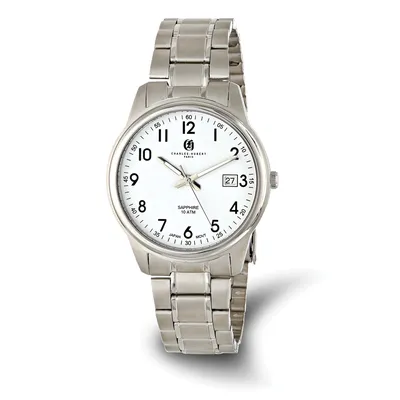
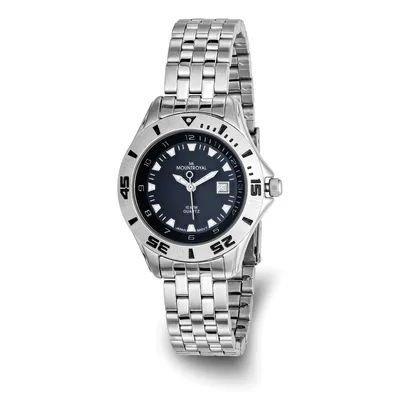
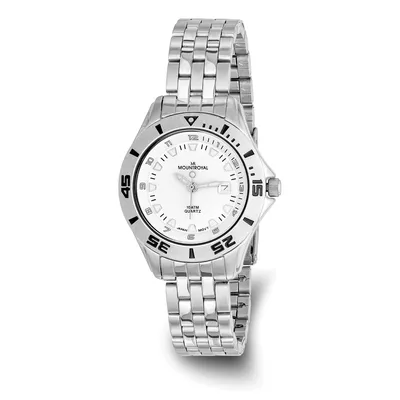
Stainless steel is the most common watch case metal: tough, rust resistant and easy to live with. Titanium is roughly 40 percent lighter than steel. Ceramic resists scratches very well but can chip from a hard knock. Brass is softer and is almost always plated, so its look depends on the finish on top.
Case materials side by side
| Material | Weight | Scratches | Good to know |
|---|---|---|---|
| Stainless steel | Solid, heavier | Resists well, and marks can often be polished out | Does not rust in normal wear |
| Titanium | Roughly 40 percent lighter than steel | Bare titanium can mark more easily than steel | Slightly darker gray, very corrosion resistant |
| Ceramic | Light | Very hard to scratch | Can chip or crack from a hard impact |
| Brass | Similar to steel | Softer than steel | Usually plated, so the finish does the work |
These are general traits. Makers use different grades and surface treatments, so two watches in the same material can wear differently.
Stainless steel
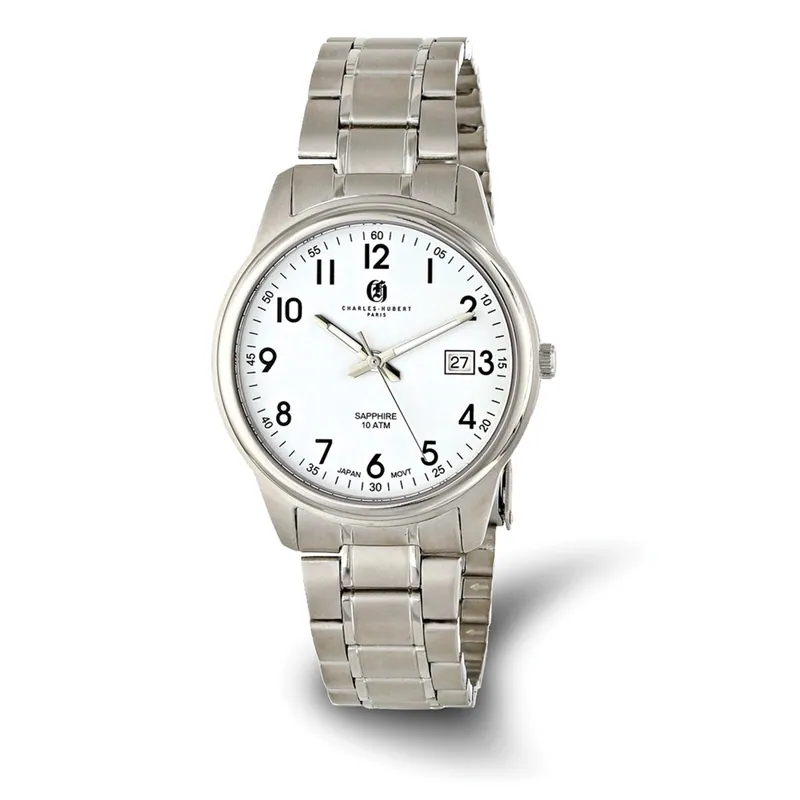
Stainless steel is steel mixed with chromium, which forms a thin layer on the surface that keeps rust away. It is strong, holds a brushed or polished finish well, and takes daily knocks without much fuss. Light scratches on plain steel can often be refinished by a jeweler. Most of our wrist watches have stainless steel cases, and many of our pocket watches do too.
Steel contains some nickel. Most people never notice, but if your skin reacts to nickel, titanium or ceramic may suit you better.
Titanium
Titanium is a strong metal that weighs far less than steel, so a titanium watch feels noticeably lighter on the wrist. It resists sweat and salt water very well. Its color is a slightly deeper gray than steel. Bare titanium can pick up fine surface marks more readily than steel, though some makers harden or coat it.
Ceramic
Watch ceramic is a hard, fired material, not pottery. It is very difficult to scratch, it is smooth and light, and its color runs all the way through, so it does not fade or wear off. The trade is that ceramic is brittle. A sharp blow or a drop onto a hard floor can chip or crack it, and a cracked part is replaced rather than repaired.
Brass and alloy
Brass is a mix of copper and zinc. It is easy to shape into detailed cases, which is one reason it is traditional for pocket watches. Bare brass tarnishes, so a brass watch case is almost always plated in a chrome, silver or gold tone.
An alloy is simply a blend of metals. Steel and brass are both alloys. When a spec sheet lists the case only as "alloy", it usually means a plated base metal blend rather than stainless steel.
Plated and tone finishes
- Gold tone, silver tone, two tone: these describe color. A gold tone watch has a gold colored finish. It is not solid gold.
- Plated: a thin layer of another metal is applied over the case metal.
- IP plated: short for ion plating. The coating is bonded to the metal in a vacuum, and it generally holds up better than traditional plating.
Any plating is a thin layer. Over the years it can wear at the edges and wherever the watch rubs against a cuff, a desk or another bracelet. Plain steel and titanium have no layer to wear through.
How to choose
- For everyday wear with little worry: stainless steel.
- For a light watch, or skin that reacts to nickel: titanium.
- For a finish that stays glossy: ceramic, if you are careful about drops.
- For a gold or two tone look: a plated watch, kept away from rough surfaces.
Whatever the case is made of, it helps to wipe it down now and then. Our guide on cleaning a watch at home covers the safe way to do it, and watch crystal types explains the glass that sits on top of the case.